
Left or Right: Monster Beats
Goblin GameMusic
4.35.00 Reviews
- Version
- 1.1.3
- Installs
- 1.00M
- Age Rating
- Everyone
Screenshots
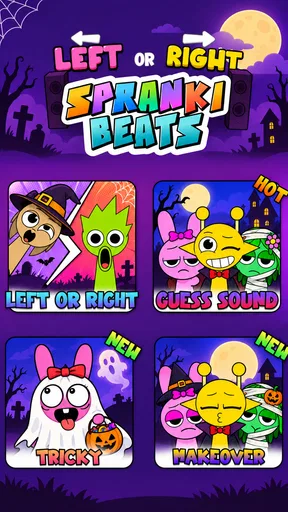


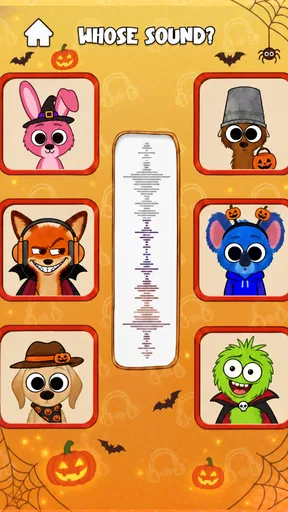

Our Review of Left or Right: Monster Beats
 Analysis by Appyee
I went into Left or Right: Monster Beats expecting a small music game built around quick decisions, and that is exactly where its appeal lies. Developed by Goblin Game, it turns the basic idea of choosing left or right into a rhythm-focused challenge. The action is simple to understand, but the timing gives each choice more weight than it first appears to have.
My first impression was that this is designed for immediate play rather than a long tutorial or a complicated setup. You see the situation, make a directional choice, and try to stay in step with the beat. When the timing works, the response feels satisfying because the visual decision and the musical pulse line up. When it does not, the mistake is equally clear, which makes it easy to understand what went wrong and try again.
That straightforward structure makes the game suitable for short breaks, casual play, and anyone who enjoys music games without wanting a large collection of menus or rules. It is free, rated for Everyone, and available for devices running Android 7.1 or later. The game was released on March 21, 2025, and its current version is 1.1.3.
How the left-or-right action becomes a rhythm challenge
When I look at how the left-or-right choice works as a rhythm challenge, I focus on the small decision that separates a casual tap from a well-timed response. The useful question is not only which side to pick, but how to stay calm enough to match the beat. That distinction leads naturally into the way the game signals progress and makes a missed moment worth examining.
The first choice is easy, but the timing changes everything
The central action is wonderfully direct: I focus on the incoming rhythm, decide whether the correct move is to the left or the right, and tap at the appropriate moment. There is no need to learn a large control scheme before playing. That low barrier is important because music games can sometimes lose new players with too many symbols, lanes, or gestures. Here, the directional idea gives the first session a clear purpose almost immediately.
What makes the choice more interesting than a simple reflex test is the combination of direction and timing. A correct side pressed too early or too late does not feel the same as a clean response. I found myself paying attention to the beat first and the visual cue second, rather than blindly tapping as soon as something appeared. That small shift is where the game starts to feel like a rhythm title instead of an ordinary reaction game.
For a new player, my practical advice is to avoid rushing the first few attempts. It is tempting to treat every prompt as a race, but the better approach is to listen for the pulse and let the visual information confirm what the music is already suggesting. This is especially useful when playing with sound on. Without audio, the experience becomes more dependent on visual timing and may feel less natural for someone who expects the music to guide every move.
Feedback makes mistakes useful rather than mysterious
The best part of a rhythm game is not simply whether a tap succeeds; it is whether the game makes the result understandable. Left or Right: Monster Beats benefits from the clarity of its basic loop. A successful action gives me the sense that I matched the moment, while a failed action tells me that my direction, timing, or attention was off. That immediate feedback encourages another attempt because I can identify a reason to improve.
I also like that the challenge does not require a long commitment before I can learn from a mistake. If I lose concentration, I do not have to spend a large amount of time replaying an extended sequence just to reach the point where I struggled. The compact nature of the interaction makes experimentation comfortable. I can try a different approach, listen more carefully, and see whether the result changes.
That creates a useful distinction between frustration and productive difficulty. A game becomes frustrating when failure feels random or when the player cannot tell what caused it. This one works best when I treat each miss as a timing lesson. The limitation is that players who want extensive explanations, detailed performance breakdowns, or a deep training system may find the feedback more immediate than analytical. Its strength is speed and clarity, not a full music-school style of instruction.
Why the beat matters more than fast fingers
It would be easy to assume that quick fingers are the main requirement, but I found that steady attention matters more. The directional decision is only half of the task. The other half is resisting the urge to tap before the rhythm is ready. That makes the game approachable for people who are not naturally fast but are willing to develop a sense of timing.
A useful everyday scenario is playing during a short wait, such as before an appointment or while taking a break from study. I can start a session without preparing a long strategy, play until my attention drops, and stop without feeling that I have abandoned a complicated campaign. The same quality makes it a reasonable choice for a younger player who wants something musical and interactive, although an adult may still need to decide whether the pace is suitable for a particular child.
There is also a small benefit for players who usually find rhythm games intimidating. Because the left-or-right structure reduces the number of possible actions, the focus stays on listening and reacting. It does not remove the challenge, but it makes the challenge easier to understand. If you have avoided music games because multi-lane controls look overwhelming, this is a gentler entry point than many traditional rhythm titles.
The reward is the feeling of a clean run
The most convincing reward in this game is the immediate satisfaction of keeping the sequence alive. A correct choice that lands with the beat creates a smooth connection between what I hear, what I see, and what I do. That connection is enough to make another attempt appealing, even when there is no need to chase a large long-term objective.
I would describe the reward as performance-driven rather than collection-driven. The pleasure comes from improving my own consistency and extending a successful rhythm, not from treating the game like a large progression system. That focus keeps the experience clean, but it also means the game may not satisfy someone who needs unlockable characters, a broad story, or a substantial catalog of modes to remain interested.
For me, the most effective way to use the reward loop is to set a small personal goal. Instead of thinking, “I must master everything,” I can aim to stay calm through the next sequence or make fewer rushed taps than in the previous attempt. This turns a simple game into a modest practice routine. It is a good example of how a limited control scheme can still support improvement when the feedback is quick enough.
The game’s audience size suggests that this simple idea has found plenty of interest: it has passed one million installs and holds an average rating of 4.3 from around 2.3 thousand ratings. I would not treat those figures as a guarantee that every player will enjoy it, but they do fit my impression that the concept is easy to pick up and broadly accessible.
Resetting quickly is part of the appeal
A failed attempt does not have to feel like a major setback. The reset is important because it keeps the distance between failure and a new try short. I can immediately reconsider what happened: perhaps I reacted to the picture instead of the beat, perhaps I pressed the correct side too early, or perhaps I simply lost focus. Then I can begin again with one specific adjustment in mind.
This reset loop is especially effective for short sessions. I do not need to reserve a large block of time to make progress. A few attempts can be enough to notice whether I am improving, and I can put the game down when I am done. That makes it more flexible than music games that depend on lengthy tracks or a carefully planned progression path.
There is a trade-off here. Quick resets are excellent for repetition, but they can also encourage automatic retrying without reflection. I found that the best results came from pausing briefly after a miss instead of tapping through another attempt immediately. Listening to the rhythm again and changing one habit is more useful than repeating the same rushed response several times.
Players who dislike restarting may not enjoy this structure. The game asks for a willingness to fail, adjust, and repeat. It is not the right choice if you want a relaxed music experience where the track plays regardless of your accuracy. It is also less suitable for someone looking for a story-led game with exploration between challenges. Its identity is much narrower: make the choice, match the moment, learn from the result, and go again.
What makes it different from ordinary music games
Compared with traditional rhythm games, Left or Right: Monster Beats feels less like performing a song through a large control panel and more like solving a sequence of timed directional decisions. That difference is useful for beginners because there are fewer actions to memorize. It also makes the game easier to understand when I only have a minute or two available.
Compared with casual tapping games, the rhythm element gives the interaction more structure. I am not simply pressing whenever an object appears; I am trying to coordinate the decision with a musical pattern. That extra layer is what gives the game its replay value. A basic left-or-right mechanic by itself could become repetitive quickly, but the timing creates a reason to return and test whether my concentration has improved.
On the other hand, people who already enjoy advanced rhythm games may find this approach too restrained. Players who want multiple difficulty systems, elaborate note patterns, long-form tracks, or detailed scoring tools may prefer a more feature-heavy alternative. This game is better understood as a focused, accessible rhythm exercise than as a replacement for a full arcade music library.
Small habits that improve the experience
I recommend using headphones when possible, not because the game requires a particular accessory, but because the rhythm is easier to follow when the sound is clear and consistent. Playing in a noisy environment can make a simple timing task feel unfair when the real problem is that the beat is being masked. If headphones are not convenient, a quiet room and a steady volume are still helpful.
Another useful habit is to keep the tapping motion small. Large gestures make it harder to remain precise, especially when the decisions arrive close together. I found it easier to keep my attention on the rhythm when my hand stayed relaxed and the input remained deliberate. This is a minor adjustment, but it reduces the tendency to turn every prompt into a frantic reaction.
I also suggest separating learning attempts from score attempts. During a learning attempt, I focus on identifying the beat and accepting that I may fail. During a score attempt, I try to preserve the calm timing that worked before. Mixing those goals can lead to unnecessary pressure. Since the game’s loop is built around immediate repetition, this two-stage approach makes each restart more purposeful.
Who should play it and who should skip it
I would recommend it to someone who wants a free music game with an instantly understandable control idea. It suits casual players, younger audiences covered by its Everyone rating, and rhythm fans who appreciate a compact challenge. It is also a sensible first step for anyone curious about music games but not ready for complex lanes or large combinations.
It is less convincing for players who need a strong narrative, extensive customization, or a deep sense of long-term progression. If your favorite games reward you with a large world, a detailed collection, or many distinct modes, this focused format may feel too narrow after the novelty of the directional mechanic wears off. The same applies if you prefer music games where the main pleasure is listening rather than being judged on timing.
The developer, Goblin Game, has kept the central idea easy to grasp, and that focus is both the game’s greatest strength and its clearest limitation. There is little friction between opening the game and making the first move, but there is also less surrounding content to distract from the core loop. Whether that is a benefit depends on what you want from a mobile game.
My verdict on the complete action-feedback-reward-reset loop
After spending time with it, I see Left or Right: Monster Beats as a compact rhythm game built around one question repeated with musical timing: which side should I choose, and when should I tap? The action is accessible, the feedback is quick enough to support learning, the reward is the satisfaction of a clean sequence, and the reset gets me back into the challenge without unnecessary delay.
That loop explains why another session begins. I am not returning because the game overwhelms me with content; I am returning because one missed beat feels close to being corrected. The next attempt offers a clear possibility: listen more carefully, avoid rushing, and make the same decision with better timing. For a short mobile game, that is a strong reason to continue.
The current version is 1.1.3, and the game remains free to play. I would approach it with the right expectations: this is a focused music challenge, not a broad rhythm platform. If you want quick sessions, simple controls, and a beat-based reason to retry, it is easy to recommend. If you want a deep catalog, a story, or advanced performance analysis, another music game will likely serve you better.
My final opinion is positive but specific. Left or Right: Monster Beats is at its best when you want a short, repeatable test of listening and timing. It turns a very small set of actions into a satisfying cycle of choice, response, improvement, and reset. That will not appeal to everyone, but for players who enjoy chasing a cleaner rhythm one attempt at a time, it delivers a clear and approachable experience.
Verdict
Strengths of Left or Right: Monster Beats
- Simple rhythm gameplay is easy to learn and play in short sessions.
- Bright monster designs make the game visually appealing for younger players.
- Quick rounds work well for casual gaming on the go.
- Increasing difficulty gives the gameplay a basic sense of progression.
- Playable without advanced gaming skills or complicated controls.
Limitations of Left or Right: Monster Beats
- Repetitive mechanics may become dull after extended play.
- Some levels can feel too easy for experienced rhythm-game players.
- Progression may lack depth compared with larger music games.
- Visual effects can feel distracting during faster sequences.
- The game may offer limited replay value once levels are completed.
Similar Picks in This Category
View All
Tiles Hop Music & Ball Game
AMANOTES PTE. LTD.4.3

Magic Tiles 3™ - Piano Game
AMANOTES PTE. LTD.4.6

Real Piano
Bilkon3.7

Piano Game: Classic Music Song
Dream Tiles Piano Game Studio4.0

Smash Colors: Music Ball Rush
BADSNOWBALL HONGKONG LIMITED4.2

Piano Music Go-EDM Piano Games
Joy Journey Music Games4.5
Frequently Asked Questions
What is Left or Right: Monster Beats?
Left or Right: Monster Beats is a rhythm-based mobile game in which you follow musical prompts and choose the correct direction or action at the right moment. Its monster-themed presentation gives the gameplay a playful, colorful style, while the main challenge comes from keeping up with increasingly fast beats. It is designed for short sessions, quick reactions, and casual entertainment.
How do you play Left or Right: Monster Beats?
The game is built around timing and simple controls. As musical patterns, prompts, or obstacles appear, you tap or select left or right according to what the game requests. Success depends on reacting accurately to the rhythm rather than using complicated controls. After spending some time with it, the mechanics are easy to understand, although later stages can become noticeably more demanding.
Is Left or Right: Monster Beats free to download and play?
Left or Right: Monster Beats can generally be downloaded without an upfront purchase, allowing players to try the core gameplay before spending money. However, availability of advertisements, optional purchases, extra content, or energy systems may vary depending on the version and platform. It is worth checking the store listing and in-game purchase information before downloading, especially if the app will be used by children.
Does Left or Right: Monster Beats require an internet connection?
The basic gameplay may be suitable for quick offline sessions, but some features can depend on an internet connection. Advertising, cloud saving, updates, leaderboards, event content, or account-related services may not work without access to the network. If you plan to play while traveling, test the game in airplane mode first, because offline availability can differ between versions and after major updates.
Is Left or Right: Monster Beats suitable for children?
The colorful monster design, straightforward controls, and short rhythm challenges make Left or Right: Monster Beats approachable for younger players. Nevertheless, parents should review the age rating, advertising content, privacy information, and optional purchases shown on the relevant app store. Fast reaction sections may also be frustrating for very young children, so parental supervision and purchase restrictions are recommended.
Play our best games!


